
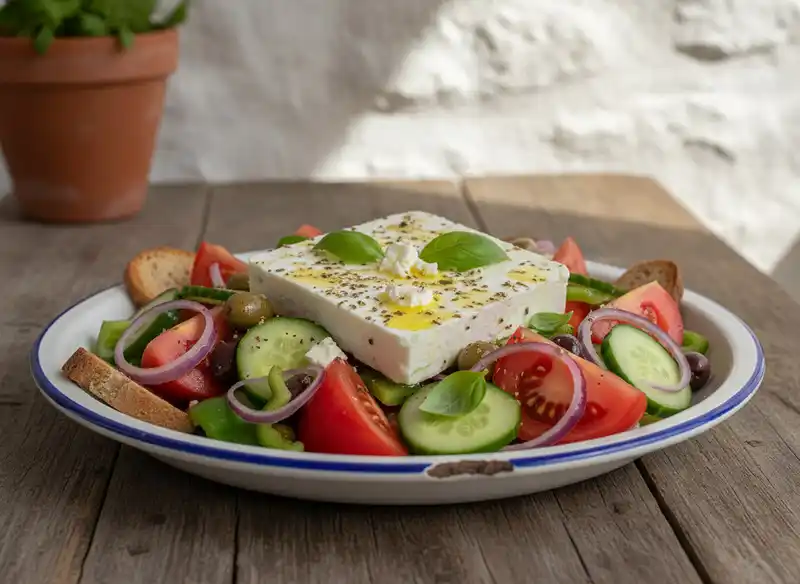
Greek Salad (Horiatiki)
There’s nothing quite like a traditional Greek salad to bring the flavors of the Mediterranean to your table. This authentic horiatiki combines crisp vegetables, creamy feta cheese, and briny olives in a simple yet satisfying dish that works perfectly as a side or light main course. With just a few quality ingredients and minimal preparation, you’ll have a restaurant-worthy salad ready in minutes.
Ingredients
- 4 medium tomatoes, cut into wedges
- 1 cucumber, sliced into rounds or chunks
- 1 red onion, thinly sliced
- 1 green bell pepper, cut into strips
- 200g Kalamata olives
- 250g feta cheese, cut into cubes or sliced thick
- 75ml extra virgin olive oil
- 25ml red wine vinegar
- 1 teaspoon dried oregano
- Salt and pepper to taste
Instructions
- Arrange the tomato wedges, cucumber slices, bell pepper strips and red onion on a large plate or in a bowl.
- Scatter the Kalamata olives over the vegetables.
- Place the feta cheese cubes on top.
- In a small bowl, whisk together the olive oil, red wine vinegar, oregano, salt and pepper.
- Drizzle the dressing over the salad just before serving.
- Toss gently if desired or serve as is.
Practical Tips
- Keep it fresh: Do not chop the vegetables too small or mix them together until the last moment, as this keeps the salad fresh and crisp.
- Quality matters: Use the best quality extra virgin olive oil and feta you can find for authentic flavour.
- Timing: Add the dressing just before serving to prevent the vegetables from becoming soggy and to maintain their natural crispness.
How to Store
Greek salad is best enjoyed fresh and assembled just before eating. If you need to prepare components ahead, store the cut vegetables and feta separately in airtight containers in the refrigerator for up to 24 hours. Keep the dressing in a separate container and combine everything only when ready to serve.
Common Questions
Can I make Greek salad ahead of time? While you can prepare individual components in advance, it’s best to assemble the salad just before serving. Pre-mixed salad will become watery as the vegetables release their juices.
What type of feta cheese should I use? Traditional Greek feta is ideal for this salad. Look for authentic feta from Greece, which has a tangier flavor and crumblier texture than other varieties.
Is there a substitute for Kalamata olives? While Kalamata olives are traditional, you can use other Greek olives if preferred, though the flavor profile will differ slightly.